
QWhy Dubai Is a Strategic Logistics Hub for Global Trade
Dubai has developed into one of the world’s most important trade and logistics centres, connecting businesses across Asia, Europe, Africa and the Middle East.
For companies involved in importing, exporting, manufacturing and distribution, location can have a major impact on supply chain efficiency. The UAE’s position between major global markets, combined with its ports, airports, road networks and logistics infrastructure, makes Dubai an important gateway for international cargo.
For businesses operating from the UAE, this creates opportunities to manage both international shipments and regional GCC distribution from a strategically located logistics base.
A Gateway Between Global Markets
Dubai’s geographic location allows businesses to connect with major manufacturing and consumer markets across different regions.
Cargo arriving in the UAE can be transported onward to customers and businesses throughout the GCC, while UAE exporters can access international markets through established sea and air freight networks.
This connectivity makes Dubai particularly attractive to:
- Importers and exporters
- General trading companies
- Manufacturers
- Wholesalers and distributors
- E-commerce businesses
- Industrial suppliers
- International companies serving GCC markets
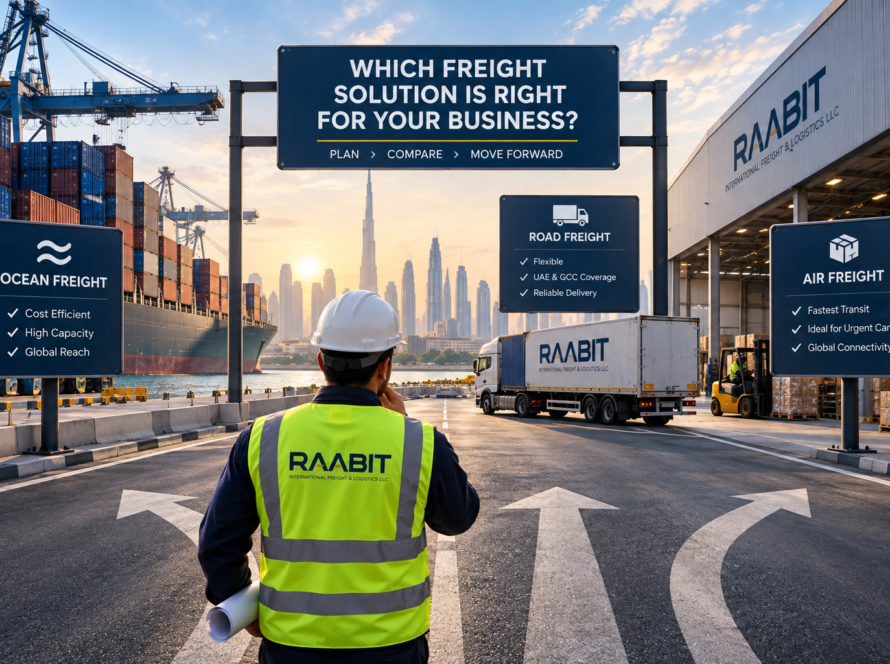
Jebel Ali and the Importance of Ocean Freight
Sea freight forms an important part of Dubai’s logistics ecosystem.
Businesses importing large quantities of commercial cargo can use Full Container Load (FCL) services, while companies with smaller shipments can consider Less than Container Load (LCL) solutions.
Once cargo arrives at the port, the logistics process may continue through customs clearance, container transportation, warehousing and final distribution.
This is why businesses should consider the entire logistics journey rather than looking only at the international freight rate.
Air Freight for Time-Sensitive Cargo
Dubai’s international air connectivity also provides businesses with access to fast cargo transportation.
Air freight can be particularly valuable when shipment speed is more important than transportation cost.
Urgent spare parts, commercial samples, high-value products and time-sensitive inventory are examples of cargo where air transportation may provide significant advantages.
The right decision between air and ocean freight ultimately depends on the shipment’s urgency, size, value and budget.
Connecting Dubai With the GCC by Road
International cargo does not necessarily stop when it reaches the UAE.
Dubai can also function as a regional distribution point for cargo moving to other GCC markets.
Road transportation allows businesses to move goods between the UAE and destinations including Saudi Arabia, Oman, Bahrain, Qatar and Kuwait, subject to applicable customs, border and transportation requirements.
For businesses serving several GCC markets, coordinating international freight and regional road transportation can create a more connected supply chain.
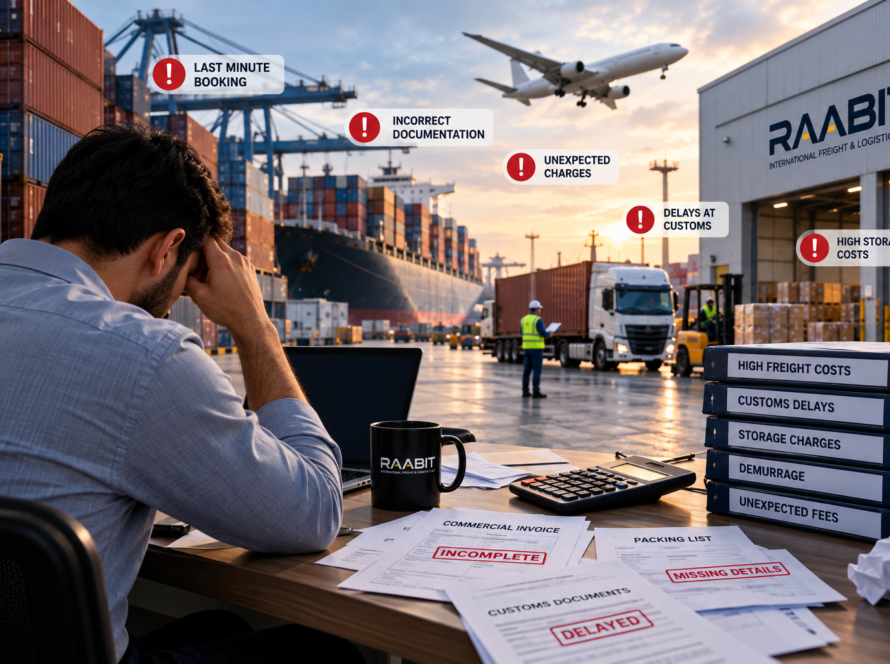
Customs Clearance Is a Critical Step
Fast transportation means little if cargo becomes delayed during customs clearance.
Importers and exporters need to ensure that shipment information and documentation are properly prepared before cargo reaches the relevant customs stage.
Depending on the shipment, documents may include:
Commercial Invoice • Packing List • Certificate of Origin • Bill of Lading or Air Waybill • Import/Export Documentation
Requirements can vary according to the cargo, HS classification, origin, destination and applicable regulations.
Good logistics planning therefore begins before the shipment starts moving.
Warehousing Creates Flexibility
Not every shipment needs to move directly from the port or airport to the final customer.
Warehousing allows businesses to receive cargo, store inventory and distribute goods according to customer demand.
For importers and distributors, this can create a logistics flow such as:
International Supplier → UAE Port/Airport → Customs Clearance → Warehouse → Customer
Businesses serving GCC markets may extend the same process to cross-border distribution.
Why Integrated Logistics Matters
International shipments involve several different parties.
A typical shipment may require coordination between the supplier, shipping line or airline, freight forwarder, customs authorities, transporter, warehouse and final customer.
When these stages are not properly coordinated, businesses can experience unnecessary delays, storage costs and communication problems.
An integrated logistics approach connects these different activities and gives businesses a clearer view of the complete shipment journey.
How RAABIT Supports Your Logistics
At RAABIT International Freight & Logistics LLC, we help businesses coordinate cargo movements across the UAE, GCC and international markets.
Our logistics services include:
Ocean Freight • Air Freight • Road Transportation • Customs Clearance • Warehousing & Storage • Container Transportation • Supply Chain Solutions
Our objective is to understand each shipment’s requirements and coordinate the appropriate logistics solution from origin through final delivery.
Building Better Connections Through Dubai
Dubai’s value as a logistics hub comes from more than its location. Its combination of international transportation connections and access to regional markets provides businesses with a strong base for managing global and GCC trade.
But infrastructure alone does not guarantee an efficient shipment.
Successful logistics still depends on planning, documentation, communication and reliable coordination at every stage.
At RAABIT, we work to bring those stages together.
Connecting Markets. Moving Business Forward.